
High-Speed ANPR and Vehicle Occupancy Detection
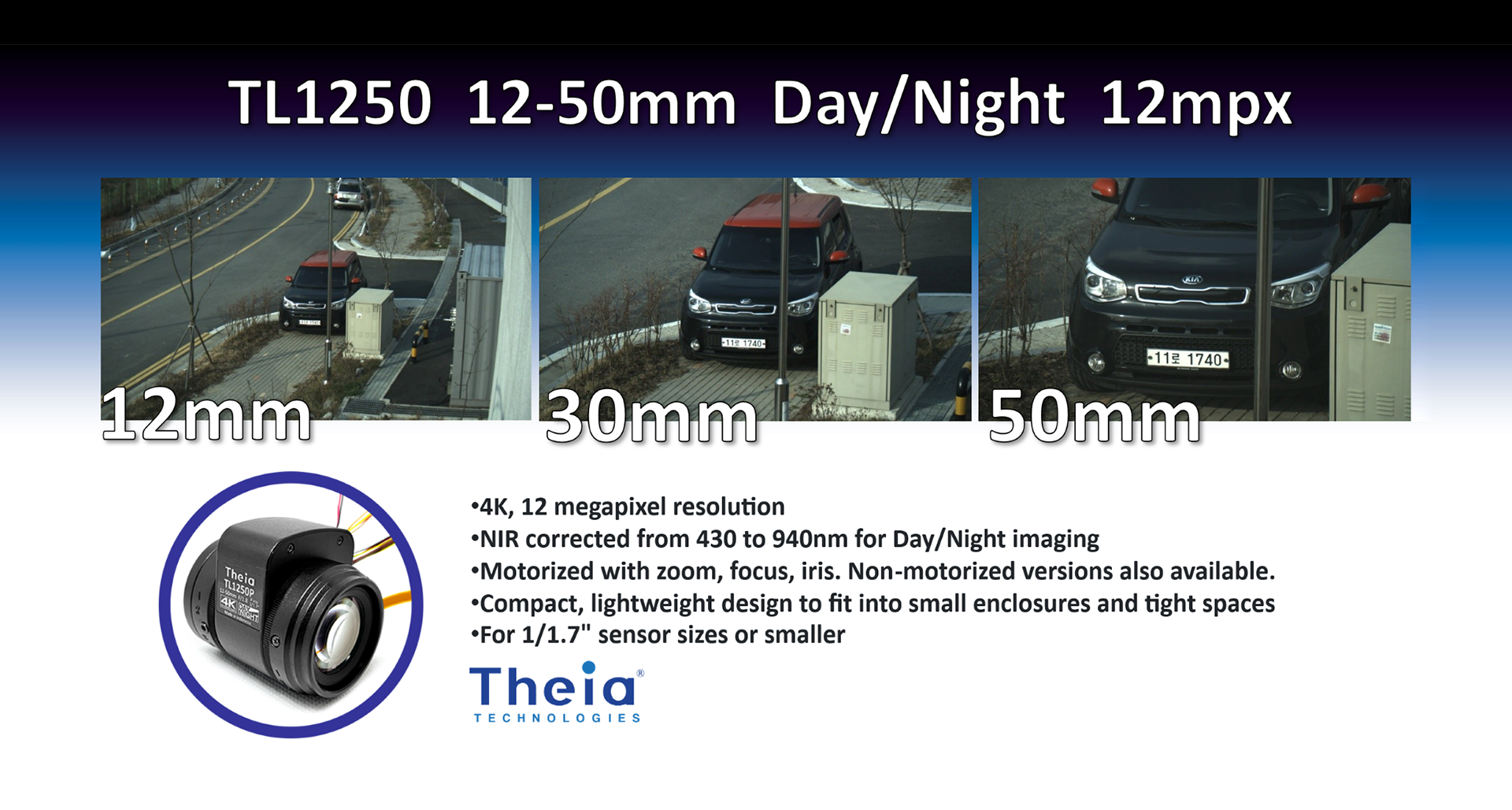
Reliable highway-speed Automated Number Plate Recognition (ANPR)/ License Plate Recognition (LPR) and vehicle-occupancy detection can benefit from a motorized telephoto lens (typically 12-50 mm focal range) mounted 100-150 m from the capture point, delivering at least 150 pixels across the license plate, NIR correction from 430-940 nm, and sharp focus across the zoom range. Theia Technologies' TL1250P-IQ imaging solution is built to this specification and is deployed in free-flow tolling, congestion-pricing, and HOT-lane systems worldwide.
❮
❯
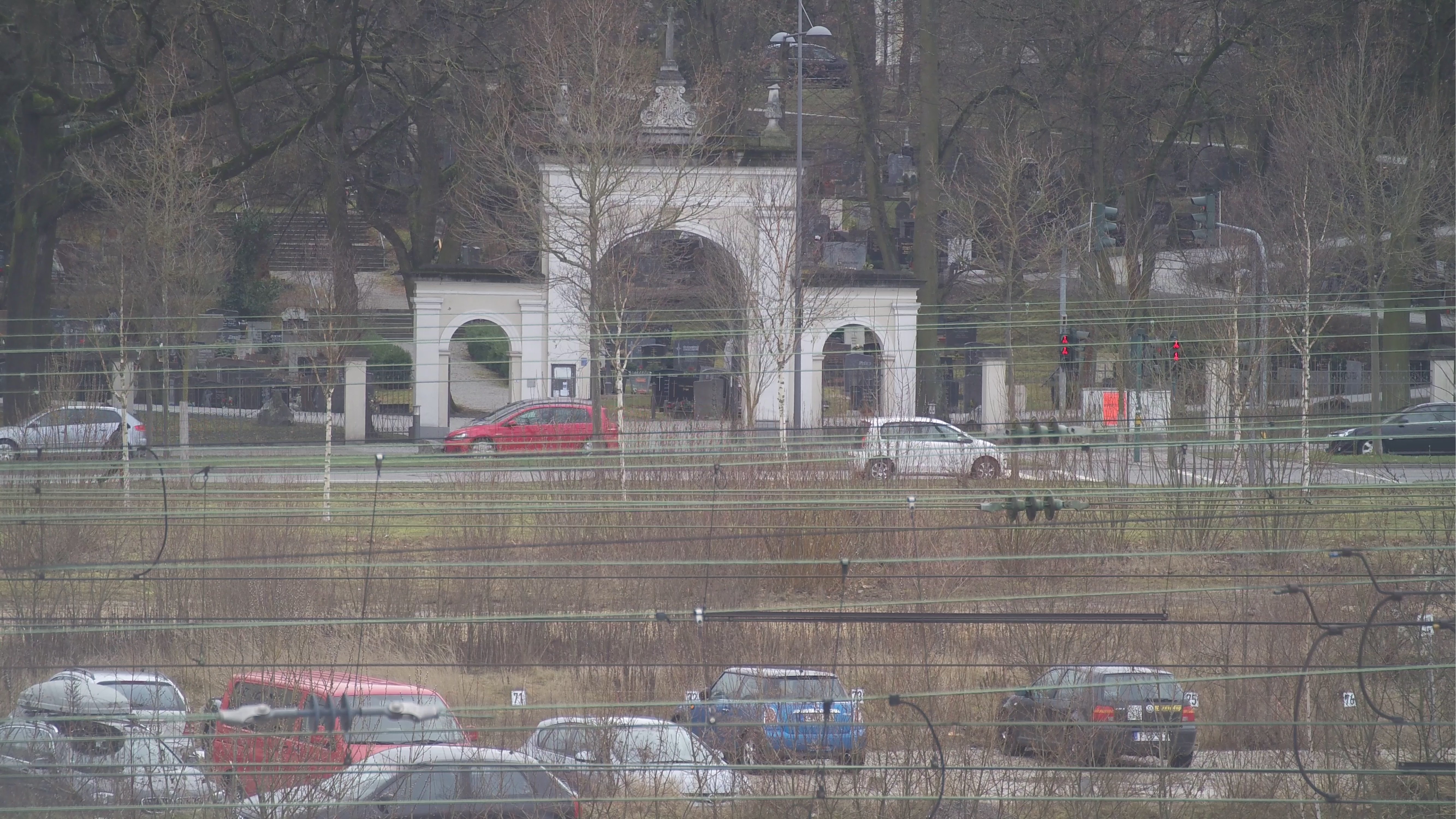
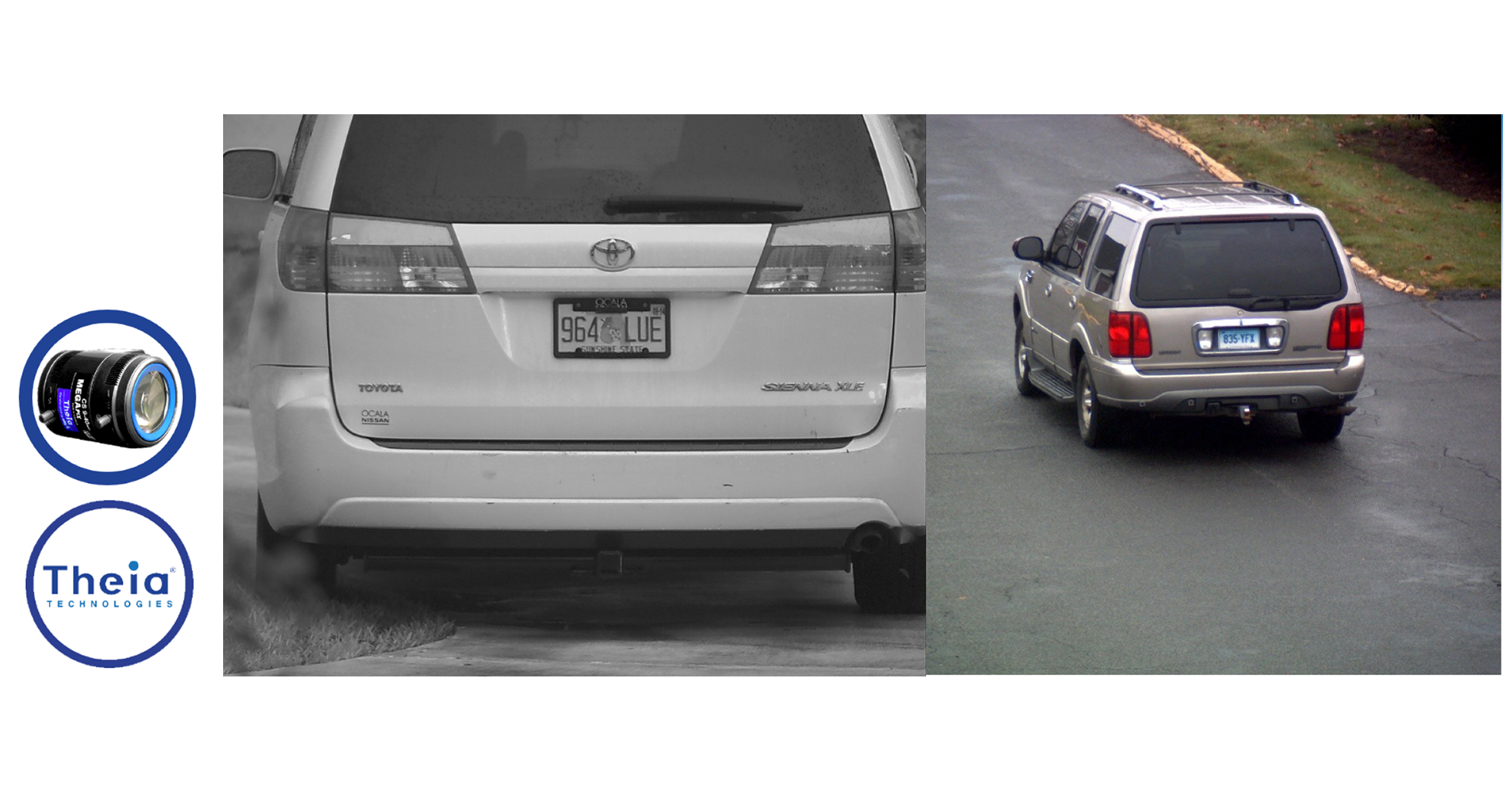
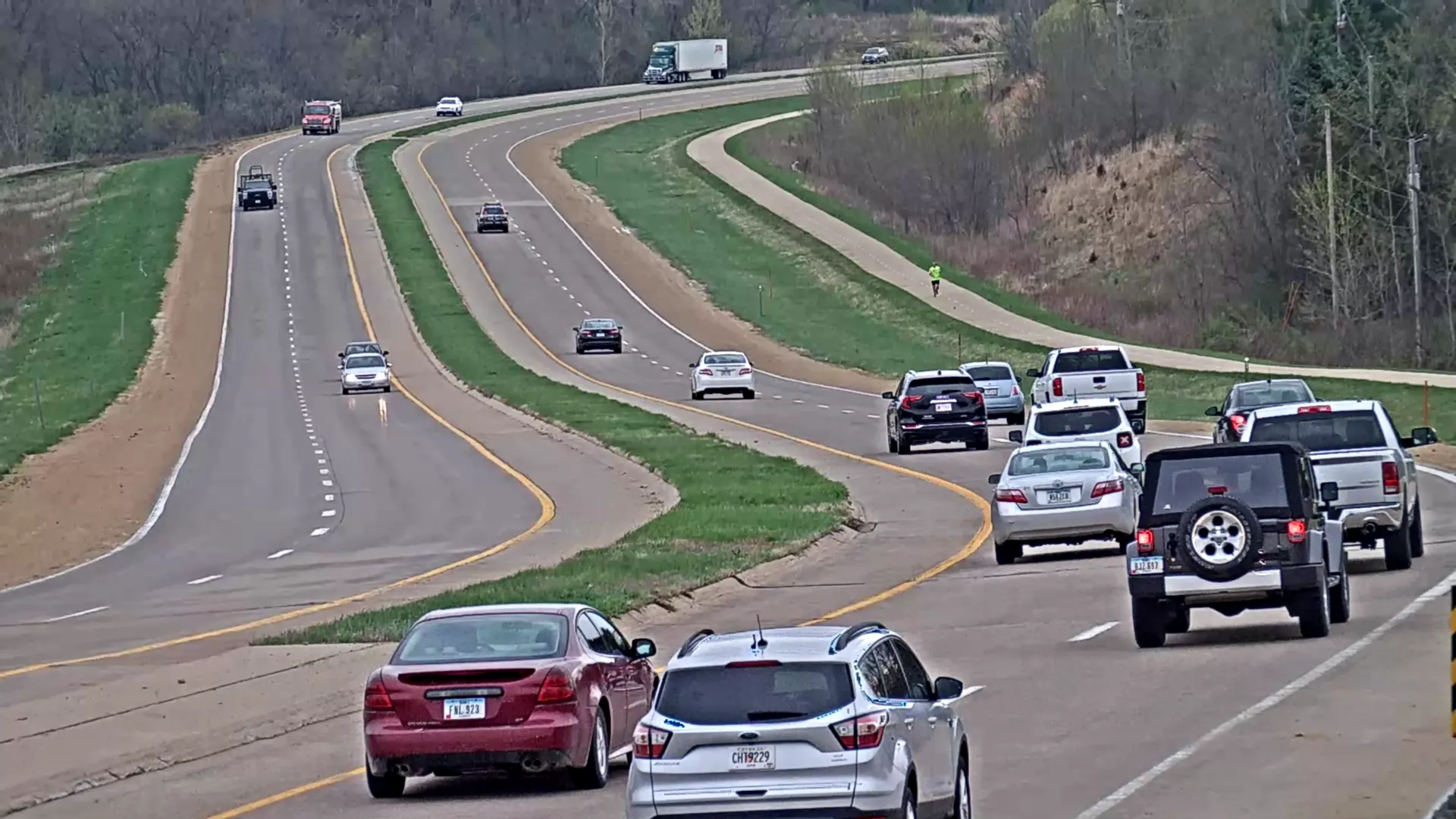
Theia telephoto lenses provide long-range imaging for ANPR, traffic monitoring, and Intelligent Transportation Systems.
High-speed ANPR/LPR systems used in free-flow tolling and Intelligent Transportation Systems (ITS) operate under some of the most demanding conditions in machine vision. Vehicles at highway speed must be identified and, increasingly, have occupancy counted for HOT/HOV lane enforcement from long distances under direct sunlight, headlight glare, nighttime operation, rain, and adverse weather. Because each vehicle typically provides only one opportunity for image capture, the optical system must deliver sufficient plate pixel density, minimal motion blur, reliable focus, and high contrast at all times.
ANPR performance is therefore determined not only by camera resolution but by the interaction of optics, sensor, illumination, and image processing. This note examines the optical design principles behind high-speed, long-range ANPR and occupancy-detection systems: working distance, focal length selection, motion blur reduction, pixel density requirements, near-infrared (NIR) imaging, and Back Focal Length (BFL) calibration for motorized zoom lenses.
What are the Environmental and Safety Implications of the Global Shift to Free-Flow tolling?
Tolling and access-control infrastructure is moving away from stop-and-pay booths toward free-flow systems, though the underlying technology mix varies by region. Germany, Belgium, and Lithuania toll roads use satellite-based GNSS tracking for trucks with no RFID tag required; Italy also runs a microwave tag system; France and Spain use 5G-based RFID. No single technology has become a global standard, and every one of these systems still relies on cameras for collecting revenue from non-registered or non-compliant vehicles by plate.
Japan's ETC network and Italy's Autostrade system use gated ANPR pre-validation so a barrier can open before the vehicle arrives. London's congestion-pricing zone is a further example: it relies on NIR-illuminated ANPR cameras to monitor and price traffic through central London, and the same imaging system identifies electric vehicles for a 25% Auto Pay discount on the daily charge.
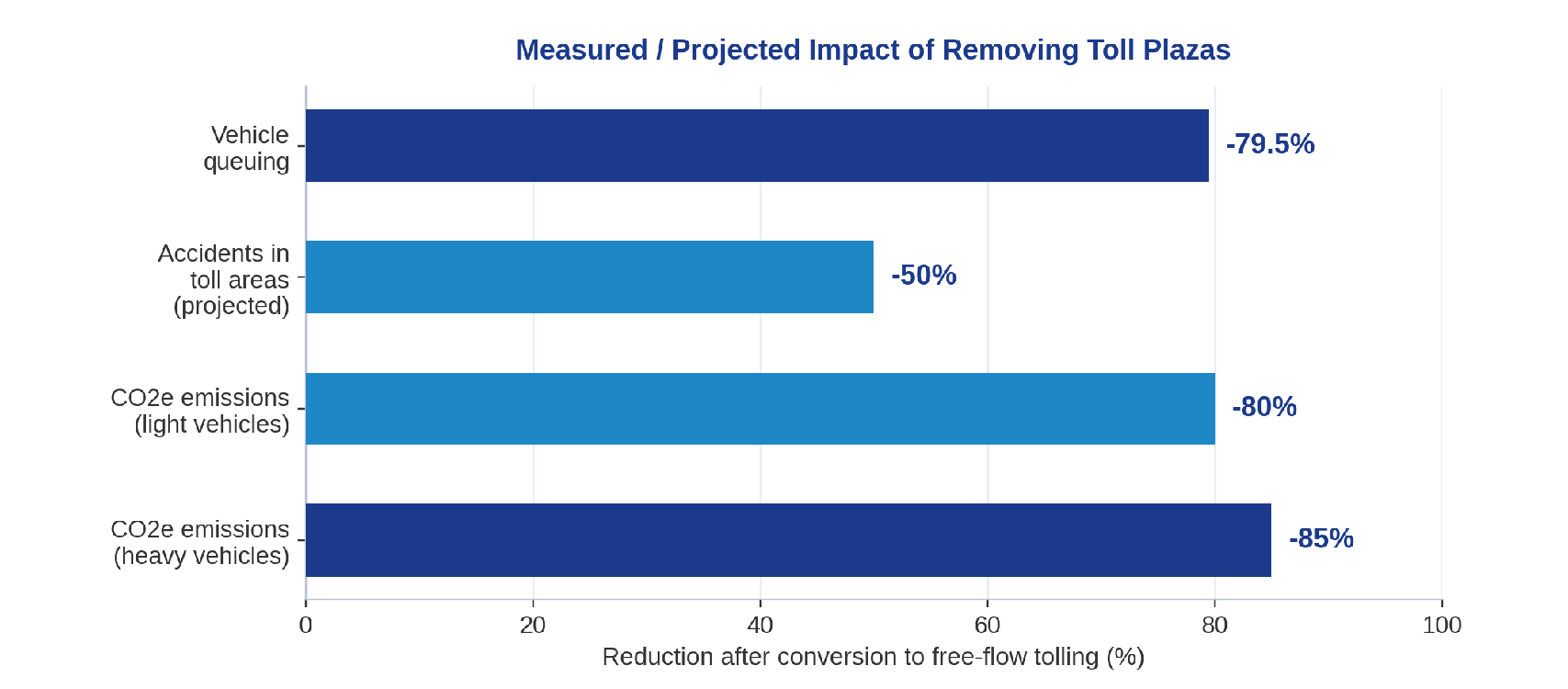
The optical performance of these cameras is not a peripheral engineering detail; it is tied directly to outcomes that researchers are actively measuring. A 2026 study in MDPI’s (Multidisciplinary Digital Publishing Institute) Infrastructures examining a national motorway's transition from barrier-based tolling to free-flow tolling found that removing physical toll plazas cut vehicle queuing by roughly 79.5%, was projected to reduce accidents in toll areas by approximately 50%, and reduced CO2-equivalent emissions at toll locations by up to 80% for light vehicles and 85% for heavy vehicles, alongside reductions in PM10 particulate emissions, primarily by eliminating the stop-and-accelerate cycle at plazas (1). These effects depend entirely on the camera correctly identifying the vehicle on the first and only pass; a missed or misread plate at highway speed cannot be recovered the way it can at a gated toll booth. This is why the optical system, and not just the recognition software, determines whether a free-flow deployment delivers on its safety and environmental potential.
(1) Colombo, C.G.; Matera, N.; Longo, M.; Borghetti, F. "Evolution of the National Toll Network Towards a Free-Flow Model: Mobility, Safety and Environmental Impacts of a Real-World Case Study." Infrastructures 2026, 11(2), 62. doi:10.3390/infrastructures11020062 (Primary source for the queuing, accident, and emissions figures in Section 1 and the FAQ; cited directly rather than through a secondary summary.)
What Are the Optical and Imaging Requirements for Successful Free-Flow Tolling ANPR?
Designing a reliable ANPR system begins with defining imaging requirements rather than selecting hardware. Each camera installation location presents unique challenges based on roadway geometry, vehicle speed, mounting location, lighting conditions, and regulatory requirements. Successful high-speed ANPR systems, however, must meet several fundamental optical requirements.
1. How Much Plate Resolution Is Enough?
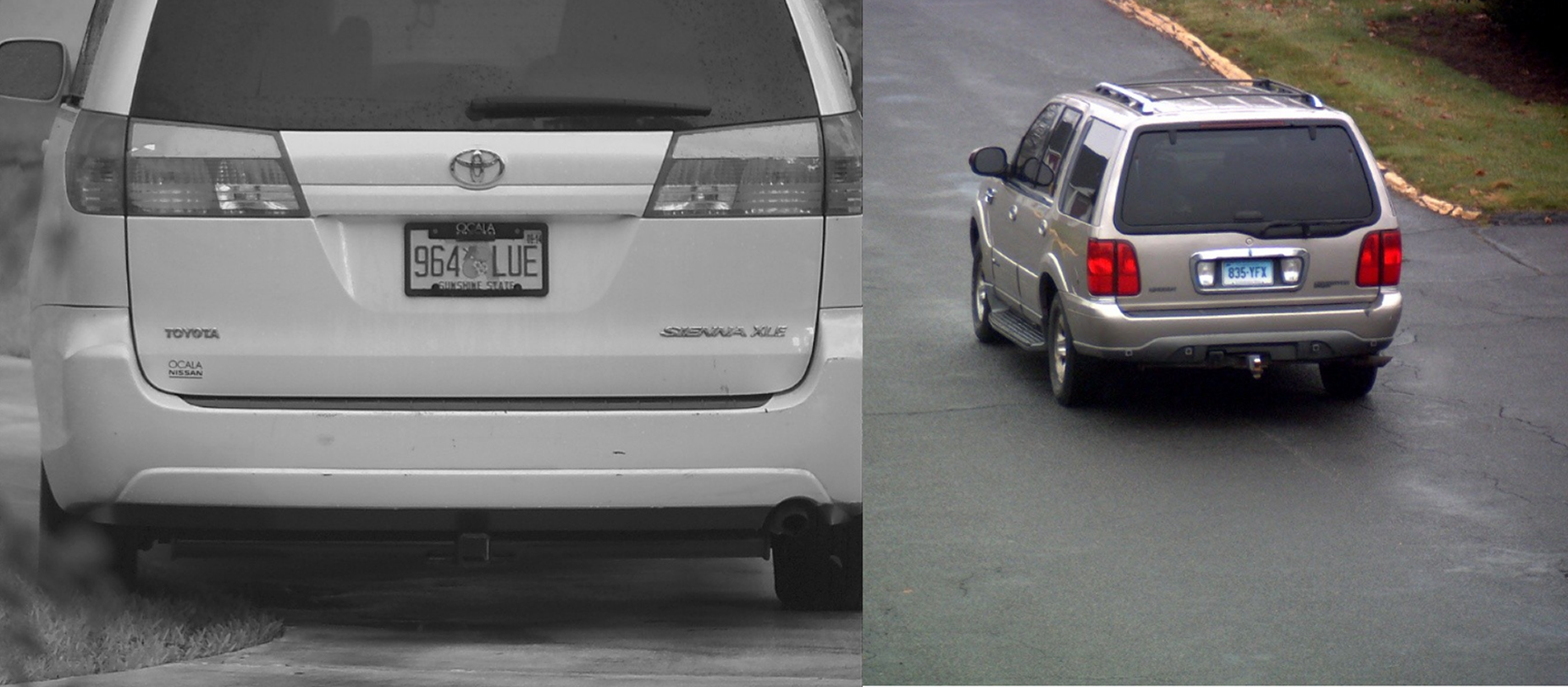
The optical system must provide enough pixel density across the license plate for reliable Optical Character Recognition (OCR). Most ANPR systems target approximately 100-150 pixels across the plate, with higher values providing margin for motion, plate angle variation, image compression, and environmental plate degradation. Achieving this depends on the combined selection of camera resolution, sensor format, lens focal length, working distance, and field of view.
2. How Is Motion Blur Controlled?
Highway vehicles can exceed 100 km/h (60 mph), leaving only a fraction of a second for image capture. Motion blur is set by the motion of the plate across the sensor during the exposure window. Plate image motion is related to the relative angle between the camera and vehicle and the speed of the vehicle. Increasing distance reduces apparent motion by reducing the angle and improves character sharpness.
3. Why Use a Long Working Distance?
High-speed tolling systems commonly mount cameras on overhead gantries or roadside structures 100-150 m from the capture point. Long working distances reduce the plate image motion, increase operational safety, and provide greater depth of field. It allows greater flexibility for installation locations. Achieving plate pixel density at these distances, however, requires sufficient optical magnification, typically through telephoto optics.
4. How Does the System Perform Day, Night, and in All Weather?
ANPR systems must operate continuously through bright sunlight, shadows, headlight glare, rain, fog, and nighttime operation. The optical system must maintain contrast and resolution in all conditions. One solution is to include near infrared (NIR) illumination synchronized to the image capture for low light conditions. NIR is used so it doesn’t affect the dark-adjusted eyes of drivers when it is flashed and so the image can filter out the visible lights and glare from the vehicle headlights while still capturing the plate image. A NIR-corrected lens enables high imaging shutter speeds with 850 nm or 940 nm illumination for low light conditions.
5. How Is Focus Repeatability and Remote Configuration Achieved?
Many ANPR cameras are installed on elevated infrastructure where physical adjustments require lane closures, specialized equipment, and maintenance personnel. Motorized optical systems provide remote zoom and focus adjustment, repeatable positioning, and stable focus tracking across the zoom range. This allows the image to be adjusted after camera installation without the need for additional lane closures; improving driver and worker safety.
6. How Is Vehicle Occupancy Detected for HOT/HOV Lanes?
High-occupancy toll (HOT)/ High-Occupancy Vehicle (HOV) and carpool lanes require cameras to count vehicle occupants in addition to reading plates. This is a distinct optical challenge: heavily tinted windshields and sun glare can obscure the vehicle interior under visible light. Because NIR illumination is narrow-band, directional, and synchronized with the camera shutter, it can penetrate tinted glass and suppress competing reflections more consistently than ambient light alone. A lens corrected across the full visible-NIR 430-940 nm range can be used for nighttime ANPR and occupancy counting without a separate camera or lens for interior imaging.
7. Installation Flexibility
Roadway deployments vary, including straight highway sections, curved approaches, multi-lane toll zones, congestion-pricing corridors, and access-control points. A flexible optical system including a varifocal lens will simplify camera installation by eliminating the need for multiple fixed field-of-view cameras. It will allow field-of-view adjustment for each situation individually enabling one platform to support multiple installation geometries.
Why Conventional ANPR Optical Approaches Fall Short
High-speed ANPR requires balancing competing optical requirements: sufficient plate resolution, low motion blur, accurate focus, and reliable operation under variable lighting. The table below summarizes where common approaches fall short in real deployments.
| Approach | Advantage | Limitation | Best Fit |
|---|---|---|---|
| Short focal length (wide-angle) | Wide coverage, easy acquisition | Higher plate image motion at close range increases blur risk | Short-range, low speed access control |
| Fixed telephoto | High magnification, low motion blur at range | Locked to one geometry; field changes need lane closures | Single, unchanging, well-defined installation |
| Motorized telephoto | Flexible field of view commissioning, optimized image resolution, low motion blur at various ranges. | - | High-speed, long-range, multi-lane ANPR with real-world constraints on camera locations |
ANPR system commissioning
Large tolling systems must have every camera field of view and focus adjusted for optimal performance. This can be a time-consuming process. Installing cameras where each lens has a pre-defined curve relating best focus to field of view can greatly improve the time required to optimize the image. For motorized lenses, any change in field of view will require a focus motor adjustment so having a camera that will automatically correct the focus will save time and reduce frustration for the technician.
Optical Design Methodology
Designing an optical system for high-speed ANPR is fundamentally an image-formation problem. Unlike general surveillance imaging, ANPR performance is judged by a binary outcome (whether the plate is correctly recognized), so optical performance at the license plate location is the primary design constraint.
1. What Determines the Required Working Distance?
Long-range tolling and enforcement systems often require telephoto optics because the camera cannot be positioned close to the vehicle path. Key factors include camera mounting height and offset from the lane, the range of vehicle heights and plate positions expected on that lane, lane width and number of lanes, the capture zone, and the required recognition distance.
2. Why Does Long Working Distance Reduce Motion Blur?
Motion blur depends on the motion of the image of the plate across the sensor during exposure, not on vehicle speed alone. For a camera viewing the vehicle at an oblique or cross-lane angle, image motion is approximately the perpendicular component of vehicle speed divided by working distance. This is an approximation, and the perpendicular-velocity assumption matters: a gantry-mounted camera looking down the roadway sees vehicles approaching nearly head-on, where the perpendicular component (and therefore blur) is small regardless of distance; a roadside camera viewing across the lanes sees a larger perpendicular component that shrinks as working distance increases.
In practice, the more consistent benefit of a long working distance is time, not just angle. At 100 km/h (27.8 m/s), a vehicle traverses a 50 m band in about 1.8 seconds. At low perpendicular travel angle such as a long telephoto lens, this can all be in the camera’s acceptable image capture range. At a closer distance, the camera will be at a steeper angle to the travel direction and the acceptable capture range could be a fraction of a second. That large difference in available time is what actually reduces motion-blur risk in practice: it gives the camera and NIR illumination system a wide window to trigger exposure, hold focus, and select the sharpest frame, rather than depending on a single, precisely timed instant.
Distance creates its own tradeoff, however: the license plate occupies fewer pixels as working distance increases. Long-range ANPR therefore requires telephoto optics that provide longer focal length for plate magnification, short exposure times for motion control, and focused NIR capability for consistent nighttime imaging.
3. How Many Pixels Across a License Plate Are Required?
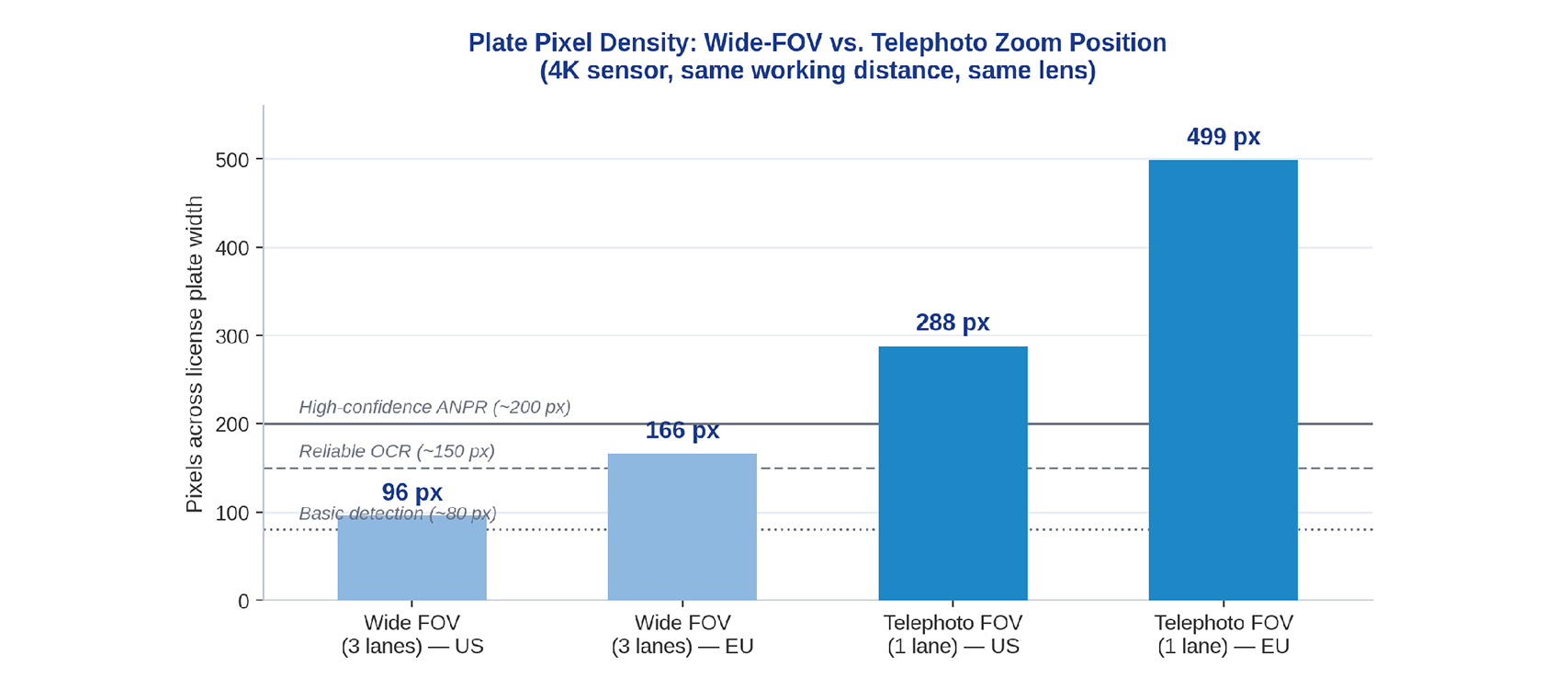
ANPR recognition accuracy depends strongly on the number of pixels covering the plate and individual characters. Basic detection typically needs roughly 50-80 pixels across the plate width, reliable OCR recognition needs approximately 100-150 pixels, and high-confidence highway ANPR should target 150-200 or more pixels. Designing for approximately 150 pixels or more provides margin for vehicle motion, plate angle variation, lighting changes, compression artifacts, dirty or damaged plates, and OCR processing variation. Pixel count on the plate scales with plate size, focal length, and sensor resolution, and scales inversely with working distance and sensor size.
Plate geometry differs meaningfully by region and should be designed for separately. US plates measure a fixed 300 × 150 mm. EU plates are wider and shorter — 520 × 110 mm is the dominant standard across most member states, though some countries use narrower formats down to roughly 340 mm, so EU width should be treated as a 340–520 mm range with 520 mm as the representative highway case. The EU plate's extra width is also spread across more characters (typically 7–8, versus 6–7 on a US plate) packed into a shorter plate height, so its characters are smaller and more tightly spaced than the total plate-width pixel count alone would suggest. For system design, the whole-plate pixel figures below should be treated as a first-order check; per-character pixel resolution — and extra margin for the denser EU layout — is the more reliable metric where EU-format plates are in scope.
Worked example: at 4K resolution (3,840 horizontal pixels) and a field of view of approximately 12 m (wide enough to span three highway lanes), a system delivers roughly 320 pixels per meter of scene width. Applied to a 300 mm US plate, that works out to roughly 96 pixels across the plate — just below the ~100-pixel figure commonly cited as a practical minimum, and adequate only for basic detection at this FOV. Applied to a 520 mm EU plate, the same setup yields roughly 166 pixels across the plate — clearing the reliable-OCR threshold on a whole-plate basis, but with more characters packed into that width and a shorter plate height, per-character resolution is tighter than the raw number implies, so this should be read as a marginal rather than comfortable result.
Zooming the same lens toward its telephoto end to cover a single lane (roughly 4 m FOV) at the same working distance increases density proportionally to about 960 pixels per meter. That yields roughly 288 pixels across a US plate and roughly 499 pixels across an EU plate — comfortably above the 150–200 pixel high-confidence target in both cases, with the EU plate's larger character count now well covered too. This is the practical tradeoff a motorized zoom lens is built to manage: wide-FOV, multi-lane coverage trades away plate (and per-character) resolution, and a longer focal length recovers it on demand, in the field, without swapping optics — and the EU case, being the denser and more demanding format, is the one to validate against when designing for mixed-region deployments.
4. How Should Focal Length Be Selected?
Focal length selection should begin with required field of view and plate pixel density, not simply vehicle distance. A shorter focal length provides a wider field of view, greater scene coverage, and easier vehicle acquisition, but reduces plate magnification. A longer focal length provides higher plate pixel density, greater recognition distance, and improved character resolution, but reduces field of view, vehicle positioning margin, and alignment tolerance. A motorized telephoto lens, such as a 12-50 mm design, allows the optical system to be adjusted after installation: the wide end for roadway coverage and easier vehicle capture, the long end for increased magnification and long-range plate recognition.
5. How Does NIR Imaging Improve ANPR and Occupancy-Detection Performance?
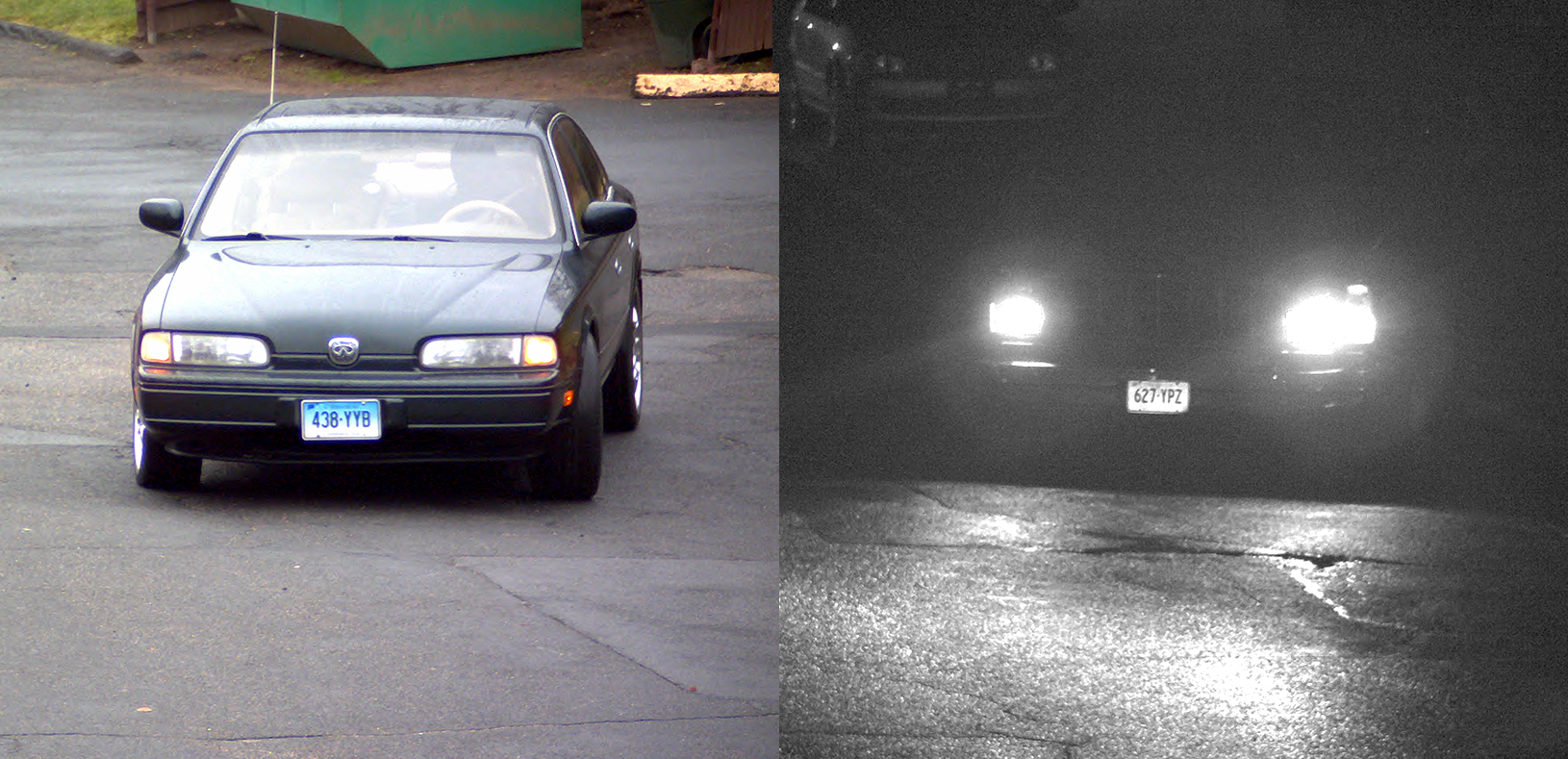
Near-infrared imaging creates a controlled lighting environment that reduces dependence on uncontrolled daylight illumination. Many license plates contain reflective materials that respond strongly to NIR wavelengths, and combining NIR illumination with a NIR-corrected lens provides higher plate-to-character contrast, reduced sensitivity to sunlight changes, improved nighttime operation, and more consistent image quality in changing weather. The same NIR path also improves occupancy counting through tinted glass. A lens designed only for visible wavelengths may experience focus shift when switching to NIR, because different wavelengths focus at different optical positions. ANPR optics should maintain correction across approximately 430-940 nm to support daylight imaging, white LED illumination, 850 nm NIR illumination, and 940 nm NIR illumination; this correction becomes increasingly important in telephoto systems, where chromatic focus errors are more noticeable.
6. Why is Back Focal Length Calibration Required?
Back Focal Length (BFL) calibration is required because the relationship between a lens and camera sensor varies between individual systems. A motorized zoom lens contains a predefined zoom/focus tracking model describing how focus changes with focal length, but this model represents average production behavior. Individual assemblies vary due to mount tolerances, mechanical stack-up variation, and sensor position. These differences are most significant at the telephoto end, where focus tolerance is smallest. BFL calibration aligns the optical model with the actual camera-lens assembly, which matters for ANPR because recognition distance depends on maximum image sharpness, OCR relies on fine character edges, telephoto systems have limited depth of field, and motorized zoom requires repeatable focus control. BFL calibration is done at the manufacturer so the camera installer can quickly and accurately find the optimal focus in the exact setup being used.
What are the Optical Design Targets of a High-Speed ANPR System?
A high-speed ANPR system should be designed around measurable optical targets. The goal is not simply capturing a vehicle image, but delivering a sharp, high-contrast plate (and, where required, cabin) image that provides reliable information for OCR and occupancy algorithms under real-world conditions.
1. License plate pixel density: at least 150 pixels across the plate for high-confidence ANPR, with sufficient character height for OCR under motion, angle, and lighting variation.
2. Optical resolution: support 4K and multi-megapixel ANPR cameras while maintaining high contrast resolution across the full image area and at long focal lengths. Lens resolving power (spot size) must match or exceed the pixel size of the sensor, so the lens itself is never the limiting factor and the resulting image stays crisp rather than fuzzy.
3. Long-range imaging capability: support long working distances while maintaining plate resolution, with sufficient magnification and without excessive field-of-view limitations.
4.Motion blur control: minimize plate blur and preserve character edges at highway speeds through short exposure times; accomplished with a fast lens that allows high light throughput, controlled illumination, and high-speed camera triggering.
5. Visible-to-NIR optical correction: maintain focus and resolution from approximately 430-940 nm, supporting NIR illumination without focus shift across daylight, low light, active infrared illumination, and weather conditions.
6. Zoom tracking accuracy: provide repeatable positioning and compensate for lens-camera variation via BFL calibration to allow quick and easy camera setup and optimally focused image.
7. Environmental reliability: maintain optical performance during 24/7 outdoor operation, accounting for temperature-induced focus changes, mechanical stability, and vibration.
8. Occupancy detection support: maintain sufficient NIR contrast and resolution to count occupants through tinted or reflective windshields, using the same optical path as nighttime ANPR.
9. System-level optimization: maximize recognition accuracy while minimizing processing requirements, image correction overhead, bandwidth demands, and installation complexity.
Recommended Hardware Configuration
A practical high-speed ANPR implementation requires optics that combine long-range magnification, remote configurability, high resolution, and reliable focus control. Theia Technologies' TL1250P-IQ, a 12-50 mm motorized telephoto lens, is one example built to this specification; it provides a flexible optical platform for applications ranging from long straight-road tolling lanes to shorter-range access control and carpool-lane validation. By combining motorized zoom, focus, iris, and filter control, one lens can support multiple roadway geometries without physical replacement or manual refocusing after installation. Its F/1.8 aperture supports shorter exposure times in low-light conditions, helping maintain image sharpness at long working distances.
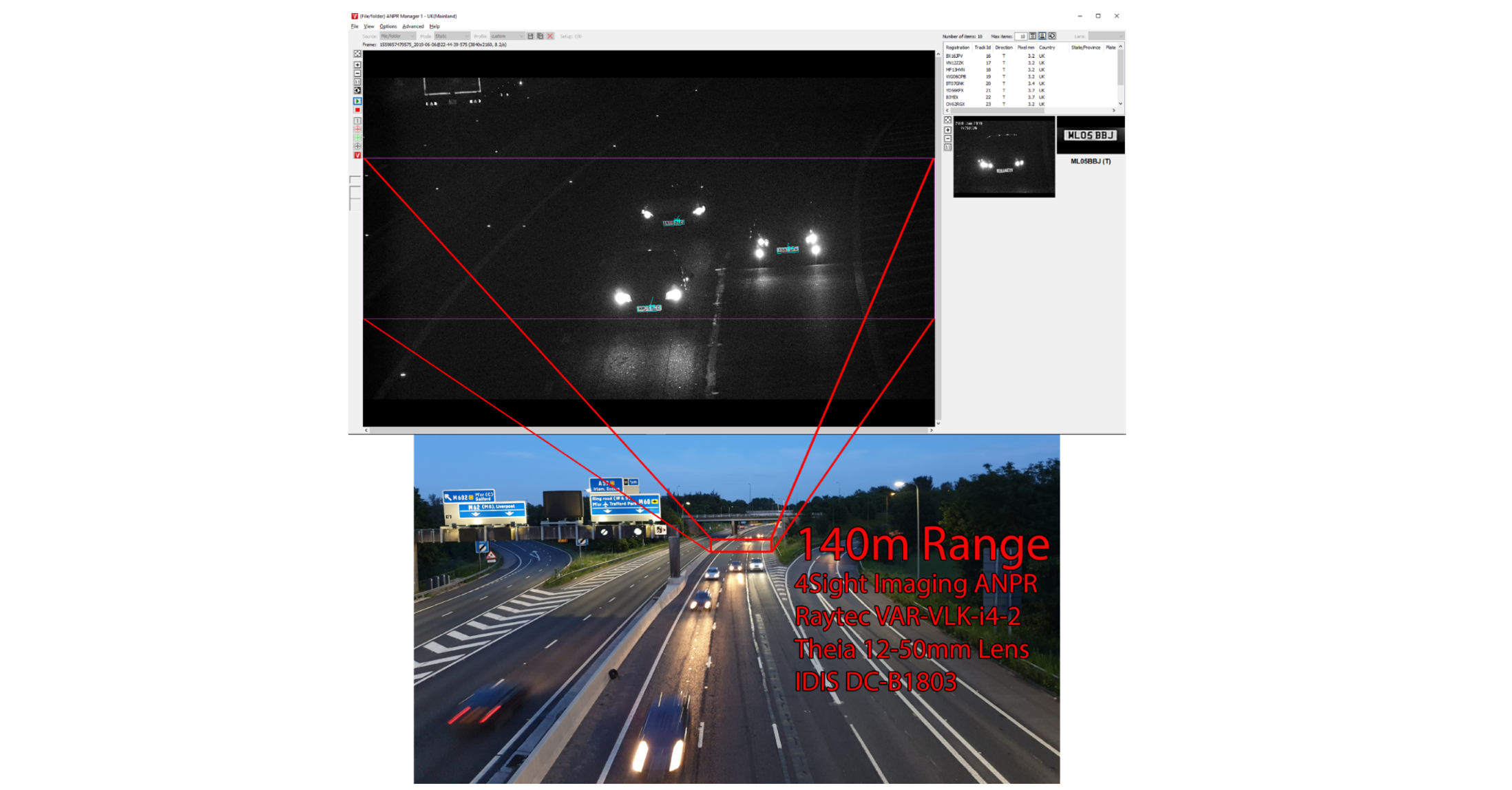
In deployed systems, a single TL1250P-IQ lens has been used to span four lanes of traffic while monitoring more than 70 m of roadway, and to deliver long-range LPR/ANPR at distances up to 140 m as well as 500 ft in mobile enforcement cameras (vendor-reported deployment figures. The TL1250P-IQ pairs with the MCR IQ motor control board so focus and field of view can be set and adjusted entirely after the gantry is installed, without stopping traffic to access the camera.
Lens Specifications
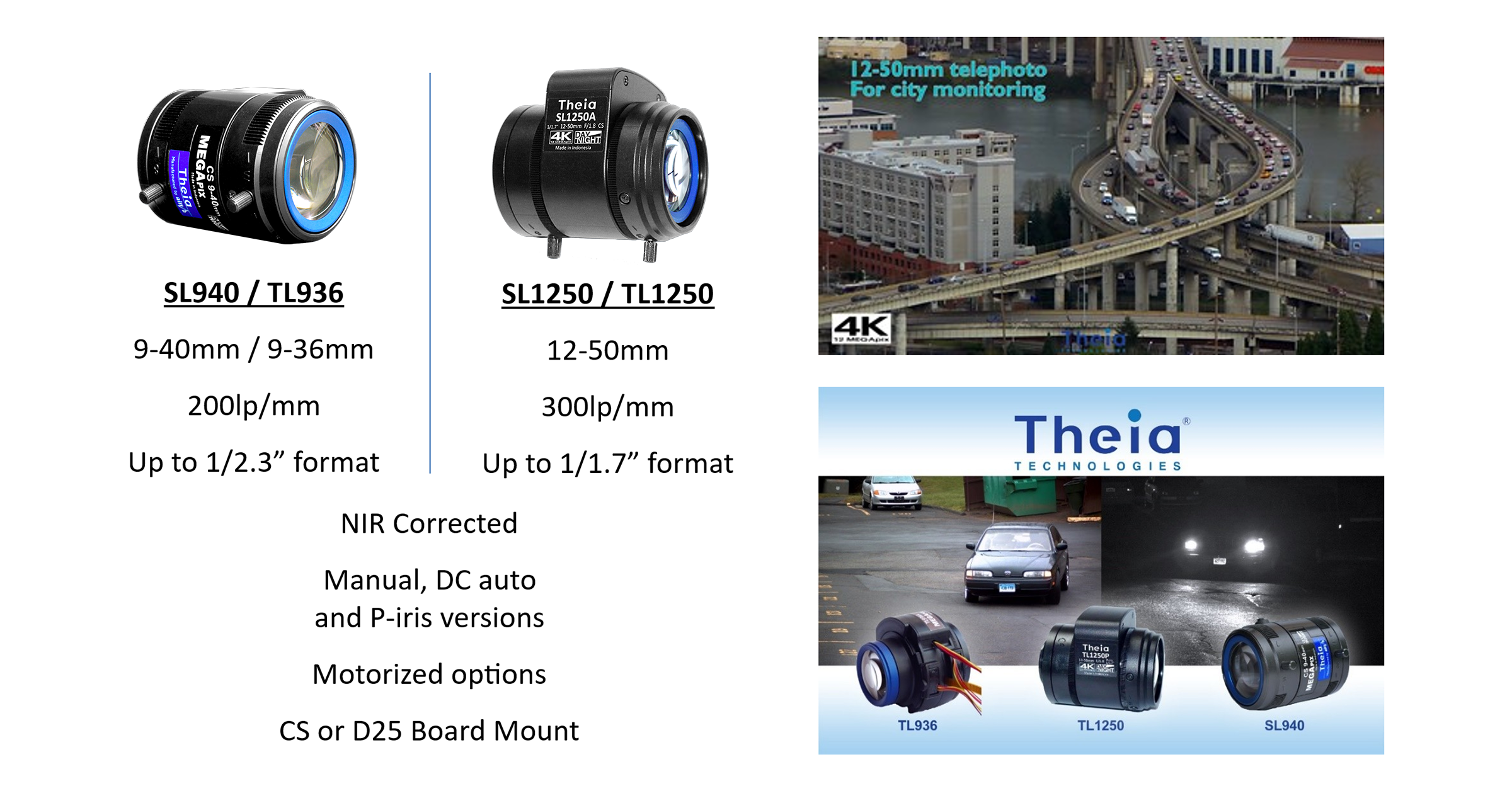
- 12-50 mm motorized telephoto zoom range
- Motorized zoom, focus, P-iris, and filter control
- F/1.8 @ 12mm - F/2.4 @ 50mm to close
- 4K / 12 MP compatible; resolution performance designed for a 1.55u size pixel delivering up to 300 lp/mm
- Visible-to-NIR correction from approximately 430-940 nm, with internal switchable filters including IR cut/visible only, 850nm notch and 940nm long pass.
- Adjustable field of view: approximately 9 degrees (long-range highway) to 36 degrees (shorter-range tolling or access)
- Supports sensors up to 1/1.7" format
- CS mount or D25 board mount
- Compact design: <65mm total track length (TTL), 50 mm lens length, approximately 74 g mass
- Integrates with Theia's MCR IQ motor control board
Software and Control Stack
The IQ Lens System combines motorized optical control with lens-specific calibration data to enable repeatable optical configuration. It includes a JSON calibration file (average zoom/focus tracking curve, distortion characteristics, aperture information, relative illumination data), an SDK providing GUI-based control and Python or C++ integration, and the MCR IQ motor control board supporting zoom, focus, iris, and filter switching over USB, I2C, and UART communication; RS485 is also in development.
Videos
What Are the Design Considerations and Limitations of an ANPR System?
High-performance ANPR optics improve recognition reliability, but final system performance depends on the interaction between the lens, camera, illumination, processing pipeline, and installation environment.
1. How Do Field of View and Recognition Distance Trade Off?
Wider field of view improves multi-lane coverage, alignment tolerance, and vehicle acquisition, while longer focal length improves plate magnification and recognition distance at the cost of scene coverage. The optimal balance depends on roadway geometry, camera mounting height, lane width, and required capture zone. At telephoto ranges, small optical variations - such as focus error, lens alignment, sensor positioning, and chromatic aberration - become increasingly important, so high-resolution ANPR systems require careful matching between lens, sensor, and camera platform.
2. How Sensitive Are Depth of Field and Focus?
Telephoto lenses provide increased magnification but typically have shallower depth of field than wide-angle optics, increasing the importance of accurate focus, mechanical stability, repeatable zoom/focus tracking, and proper calibration. A slightly defocused image may look acceptable to the human eye but can significantly reduce OCR performance because character edges lose contrast.
3. What Are the Lighting and Exposure Limitations?
Even a high-performance optical system requires proper illumination and exposure control. Systems must manage direct sunlight, headlight glare, low-light conditions, reflective plates, rain, and fog. NIR illumination improves consistency, but designers must also consider illuminator placement, exposure settings, sensor sensitivity, and lens transmission efficiency; the objective is a sharp, high-contrast image, not simply a bright one.
4. What Installation and Integration Constraints Apply?
Real-world deployments introduce fixed camera locations, limited post-installation access, temperature variation, vibration, and weather exposure. Motorized optics simplify deployment by enabling remote adjustment of zoom, focus, and iris, but integrators must still account for calibration, camera alignment, and environmental protection.
5. How Does Optical Performance Trade Off Against System Cost?
Higher-performance optics can improve recognition reliability, but designers must balance lens cost, camera resolution, processing requirements, illumination hardware, and installation complexity. Lower-cost optics may shift additional burden onto software processing or reduce reliability in difficult conditions. For mission-critical ANPR systems, optimizing the optical front end can reduce downstream complexity, though the right balance depends on the specific deployment's tolerance for false reads versus its capital budget.
What are the Necessary Steps for ANPR System Design?
1. Define application geometry: camera mounting location, vehicle distance range, number of lanes, vehicle speed, capture zone.
2. Calculate required optical magnification: target pixels across the license plate, camera resolution, sensor size, required focal length range.
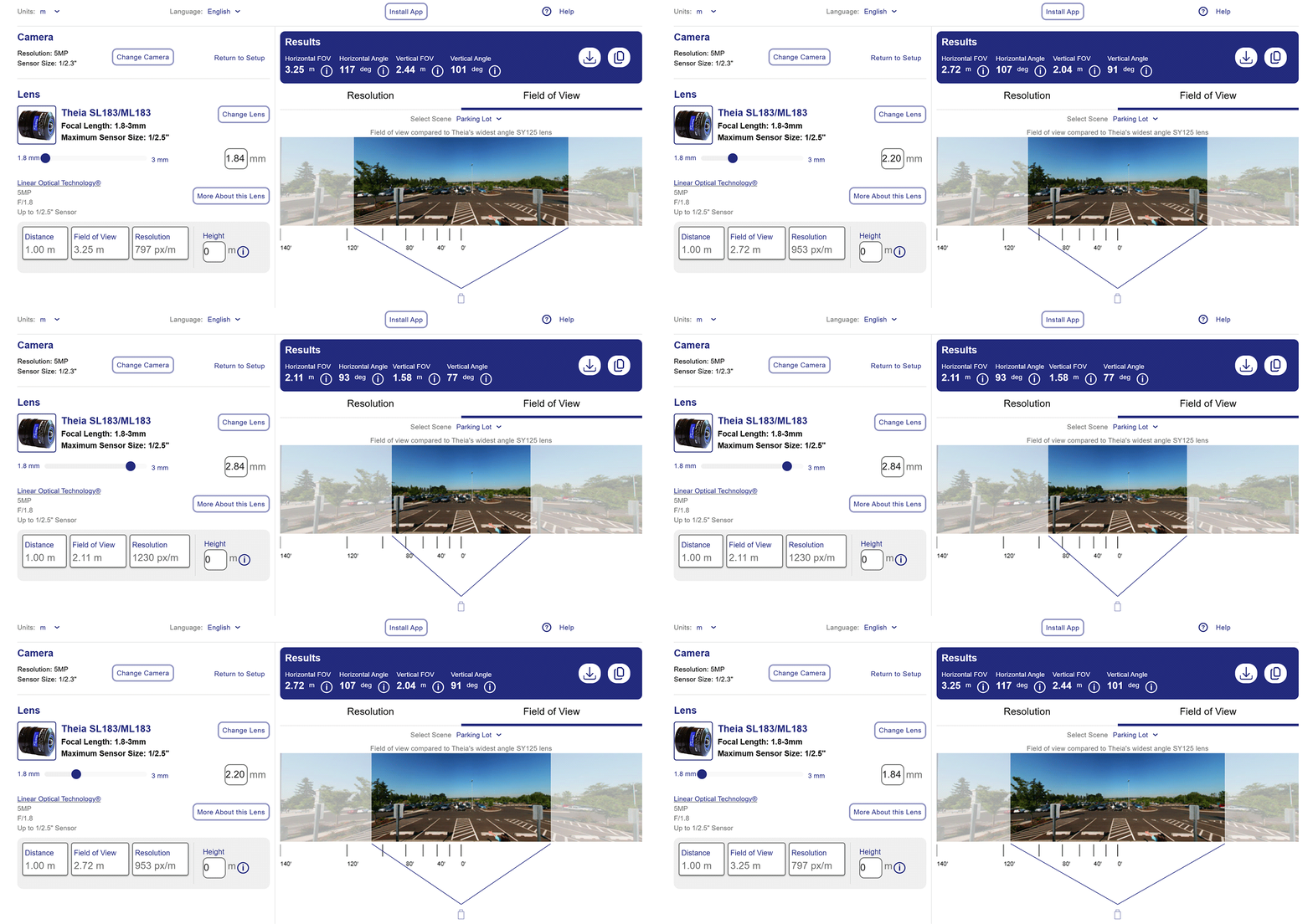
Tools like Theia Technologies’ award-winning Theia's Lens Calculator and Resolution Simulator help system designers evaluate trade-offs by estimating pixel density and field of view based on camera sensor size and resolution, lens parameters such as focal length, and system geometry including distance, height, and angle.
This enables systems designers and engineers to quickly assess whether a given configuration meets the requirements of the application.
3. Select lens and camera combination: image resolution requirements, sensor size to lens image circle match, NIR compatibility, zoom range, mechanical integration, environmental requirements.[
4. Perform system calibration: Back Focal Length calibration, focus tracking verification, image quality validation.
5. Validate under real operating conditions: day/night operation, vehicle speeds, plate angles, weather conditions, OCR recognition performance.
Frequently Asked Questions
1. What happens if a vehicle's plate comes in under the pixel-density target?
Recognition doesn't fail cleanly at a threshold — it degrades. Below roughly 100 pixels across the plate, OCR engines increasingly fall back on partial-character inference and confidence scoring rather than direct matches, which is where misreads on similar-looking characters (0/O, 8/B) tend to originate. This is why systems are designed with margin above the minimum rather than to the minimum itself.
2. Does a longer working distance ever hurt more than it helps?
Yes, if focal length isn't increased to compensate. Distance alone buys time and reduces angular motion, but it also shrinks the plate in frame — a camera pushed further back on a fixed wide lens can end up with a sharper but smaller, lower-density image. The two variables have to move together, which is the practical argument for a zoom lens rather than a fixed lens if mounting geometry isn't finalized.
3. Is occupancy counting through NIR reliable across all window tint levels?
Not universally — very dark aftermarket tints or multi-layer privacy glass can still attenuate enough NIR to limit usable contrast, even with a corrected lens and synchronized illumination. Optical correction and illuminator placement set the ceiling on what's possible; the glass itself sets the floor, and that varies by jurisdiction and vehicle age in ways the camera can't control.
4. How often does BFL calibration need to be repeated after commissioning?
It's primarily a one-time step tied to the specific lens-camera pairing, not a recurring maintenance task, since the tolerances it corrects for (mount stack-up, cover glass thickness) don't change over the unit's life. Recalibration would typically only be needed if the lens or camera body were swapped individually rather than replaced as a matched pair. This calibration should be done at the manufacturer.
5. Can this same optical approach support enforcement beyond tolling — incident detection, speed enforcement, wrong-way alerts?
The core optical requirements overlap substantially: long working distance, NIR correction, and motorized zoom all serve non-ANPR ITS use cases like license-plate-linked incident review or wrong-way vehicle capture. What changes is the triggering and processing logic downstream. Lens, camera, and illumination selection procedures are largely use-case agnostic.
6. How does temperature swing affect a gantry-mounted lens over a multi-year deployment?
Thermal expansion in the lens barrel and housing can shift focus slightly across seasonal extremes, which is a separate issue from the manufacturing-tolerance problem BFL calibration solves. Systems deployed in areas with large temperature variations over days or months typically need either athermalized optical design or periodic focus verification as part of routine maintenance, distinct from the initial calibration step. A lens like Theia’s TL1250 lens with an athermalized temperature operation range of -20C to 60C will create a sharp image across the temperature range without the need for refocusing.
7. Can Polarizing Filters help with Glare?
Yes, for specular reflections — off windshields, wet plates, and glossy plate coatings — a circular polarizer blocks light in one polarization orientation while passing the other, which is why Theia offers a filter mount on the TL1250 for adding an external polarizing or band-pass filter. The trade-off is throughput: a polarizer typically costs a stop or more of light, which works against the NIR margin needed for plate density at range, so illumination power or exposure has to absorb that loss. Effectiveness is also angle-dependent — a fixed gantry-mounted camera needs the polarizer oriented for the dominant glare source (typically low sun angle or oncoming headlights) at install time, since it can't rotate to track glare through the day the way a handheld filter would. For that reason, polarizers tend to supplement rather than replace synchronized NIR illumination, which handles headlight and wet-road glare by overwhelming ambient reflections rather than filtering them.
Conclusion
High-speed ANPR performance is ultimately limited by the quality of the image delivered to the recognition algorithm. Selecting the correct optical architecture, including focal length, resolution, NIR correction, and calibration strategy, allows the camera system to maximize recognition accuracy while reducing dependence on computational correction. A properly designed telephoto ANPR system transforms the lens from a passive imaging component into an active performance enabler within the vehicle recognition pipeline. As free-flow tolling, congestion pricing, and HOT-lane/HOV-lane enforcement expand, the optical system increasingly determines whether the AI, OCR, and occupancy-detection algorithms receive the image quality required for reliable automated vehicle identification, and whether operators realize the revenue generation, safety, and environmental gains associates with these systems.
Sources
Colombo, C.G.; Matera, N.; Longo, M.; Borghetti, F. "Evolution of the National Toll Network Towards a Free-Flow Model: Mobility, Safety and Environmental Impacts of a Real-World Case Study." Infrastructures 2026, 11(2), 62. doi:10.3390/infrastructures11020062 (Primary source for the queuing, accident, and emissions figures in Section 1 and the FAQ; cited directly rather than through a secondary summary.)
Transport for London / RAC Drive, current London Congestion Charge policy documentation (25% Auto Pay discount for battery electric vehicles, effective January 2026). General ANPR camera methodology for the London scheme is publicly documented by TfL; specific camera counts and illumination wavelengths in earlier drafts of this note could not be independently verified and have been removed or generalized accordingly.
Theia Technologies internal optical design guidelines and product documentation for the TL1250P-IQ, MCR IQ, and TL410P-IQ (specifications and deployment figures are vendor-reported).
©2026, Theia Technologies. 29765 SW Towne Center Loop W Ste 4 Wilsonville OR 97070
+1 (503) 570-3296 Fax +1 (503) 570-8637
Email: info@theiatech.com
Specifications subject to change without notice. Modification of this document is not permitted without written permission from Theia Technologies.